

Book Club: Drink Water and Mind Your Business
2 min read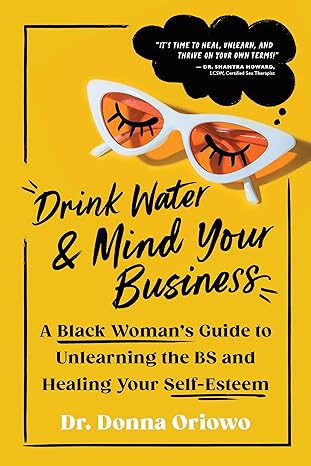
By Karen Rae
Self-esteem ain’t self-taught―and it does see color.
Let’s be real: society was not built with the needs of Black women in mind. And as a result, we learn that the only way to feel good about ourselves is to prioritize everyone else’s needs over our own. We find our value in being the perfect partner, mother, daughter, employee, and friend. But that is exhausting. Instead of feeling good about how dope we are―regardless of our service, bank account, or looks―we only feel good about what we do for others.
Supremacy culture teaches us to hate Black people, to hate women, and to especially hate Black women… except when they need us to either save them or serve them. So in a world where our service is required for acceptance, how could we ever feel good about ourselves while also giving the middle finger to systems of power? How can we possibly live our best lives? How are we supposed to feel confident, secure, and fabulous AF in our bodies?
The answer: Self-esteem. Self-esteem as we know it has been gatekept by the white and male supremacist delusions for far too long. It’s time to put power where it actually belongs.
In Drink Water and Mind Your Business, Dr. Donna Oriowo helps readers understand the basic foundations of self-esteem―what it is, how society molds it, and how it affects us all―and offers real, meaningful solutions to feel like the most glorious and badass versions of themselves. Based on years of research and Dr. Donna’s career as a licensed sex and relationship therapist, this book will help you set boundaries, prioritize your needs, understand your immense worth, and pursue a life that brings you pleasure and joy.
Our Review
this book is a direct and grounded reflection on boundaries, self-worth, and emotional clarity. The book centers on the idea that peace begins when you stop overextending yourself and start prioritizing your own healing. Its tone is conversational and straightforward. Rae focuses on practical mindset shifts rather than abstract theory. She addresses people-pleasing, comparison, insecurity, and misplaced loyalty with clear language and relatable examples. The message is consistent throughout: protect your energy, mind your growth, and stop carrying what does not belong to you.
The structure makes it easy to read in short sittings. Each section reinforces personal accountability and encourages readers to examine habits that quietly undermine confidence. It reads less like a lecture and more like advice from someone who has done the work and wants others to do the same.
This pairs well with a Monday confidence routine because both emphasize clarity, boundaries, and intentional living. It is a steady reminder that confidence is built through daily decisions, not dramatic reinvention.