
The Stories We Tell: Inside the 2026 Harlem Book Fair
9 min read
Nearly three decades after its founding, the Harlem Book Fair returned to 125th Street with books, live performance, children’s programming and conversations about storytelling, ownership, health, economics and cultural memory. Intellectual Ink Magazine spent the day inside a literary institution continuing to carry Black literary tradition forward.
By Julia Press Simmons
On Saturday, August 29, the plaza outside the Adam Clayton Powell Jr. State Office Building became a temporary neighborhood of books. White tents stretched across the concrete as authors stood beside stacks of their work, publishers arranged catalogs across folding tables, readers stopped to ask questions and children moved through brightly colored literary displays. The familiar rhythm of a book fair was everywhere, with authors calling out to passing readers, explaining their stories, signing copies and settling into conversations with people who stopped to browse.
The 2026 Harlem Book Fair extended beyond the outdoor marketplace. Author readings, panel discussions, poetry, live music and children’s programming created multiple points of entry into the day. The official program included fiction and nonfiction alongside conversations about women’s health, filmmaking, economic justice, entrepreneurship, spirituality and Black Futurism. Together, the books and programming raised larger questions about who gets to tell stories, who owns them and which stories ultimately become part of the cultural record.
Filling a Literary Void
To understand the significance of the Harlem Book Fair, it is necessary to understand the problem founder Max Rodriguez was attempting to solve. Rodriguez saw a gap in the coverage and recognition of Black books, a concern that led to QBR/The Black Book Review and eventually to the creation of a physical gathering where Black writers and books could receive greater visibility and connect directly with readers.
The first Harlem Book Fair was held in 1998 at the Harlem State Office Building Plaza. What began as a relatively modest gathering eventually developed into one of the country’s most recognizable celebrations of Black literature, attracting major writers and, at its height, thousands of visitors to Harlem.
That history gives HBF significance beyond its rows of books and vendor tables. Its creation addressed larger questions that continue to follow publishing: who gets reviewed, who gets promoted, which authors receive institutional attention and which books are treated as culturally important. The fair also demonstrated what can happen when communities build their own platforms and create direct access between writers and readers.
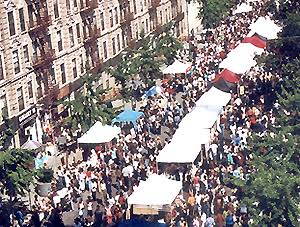
An earlier Harlem Book Fair fills the streets of Harlem. Archival photo courtesy of AALBC.com, from “2013 Harlem Book Fair Celebrates New Voices, New Vision.”
Back on 125th Street
HBF’s history and mission remain firmly rooted in creating visibility for Black literature and strengthening the African American literary community. The 2026 gathering also showed how a culturally specific institution can welcome a broader community and continue honoring the purpose that led to its creation.
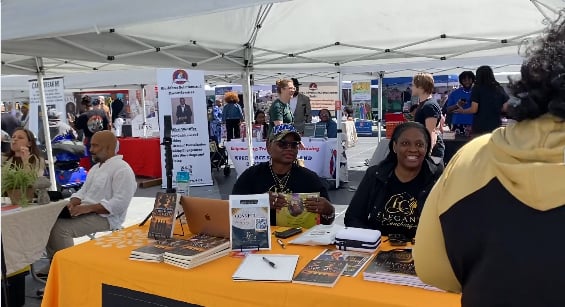
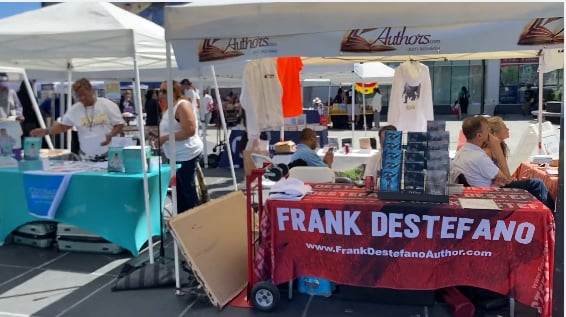
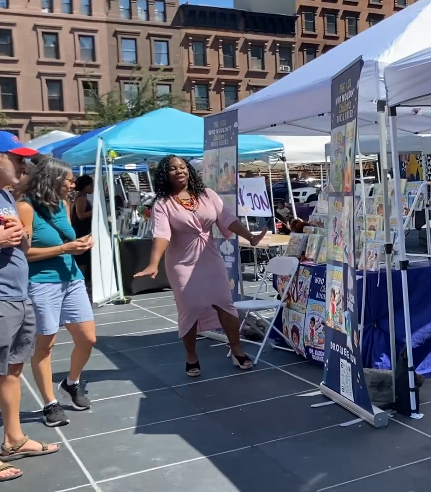
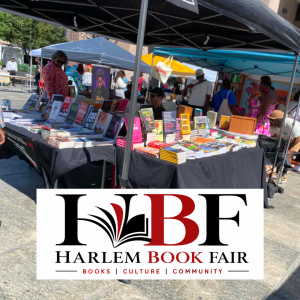
Authors, publishers and literary entrepreneurs filled the plaza of the Adam Clayton Powell Jr. State Office Building during the 2026 Harlem Book Fair. Photo by Intellectual Ink Magazine.
The fair operated simultaneously as a marketplace and cultural program. On the Outdoor World Stage, scheduled presentations moved through nonfiction, fiction, self-help, spirituality, poetry and romance. Eric Kellum presented Sexual Healing: A Man’s Lessons Learned Along the Way, Wayne Dawkins appeared with Black and Golden, NABJ-50, and Torrie Q. Jones brought Black Futurism into the program with Reborn. Poetry also appeared throughout the schedule.
Live music was woven through the afternoon as Deidre McEachern & Signature Live! appeared in several blocks throughout the Outdoor World Stage schedule. The combination allowed the program to move naturally between books, poetry, conversation and performance.
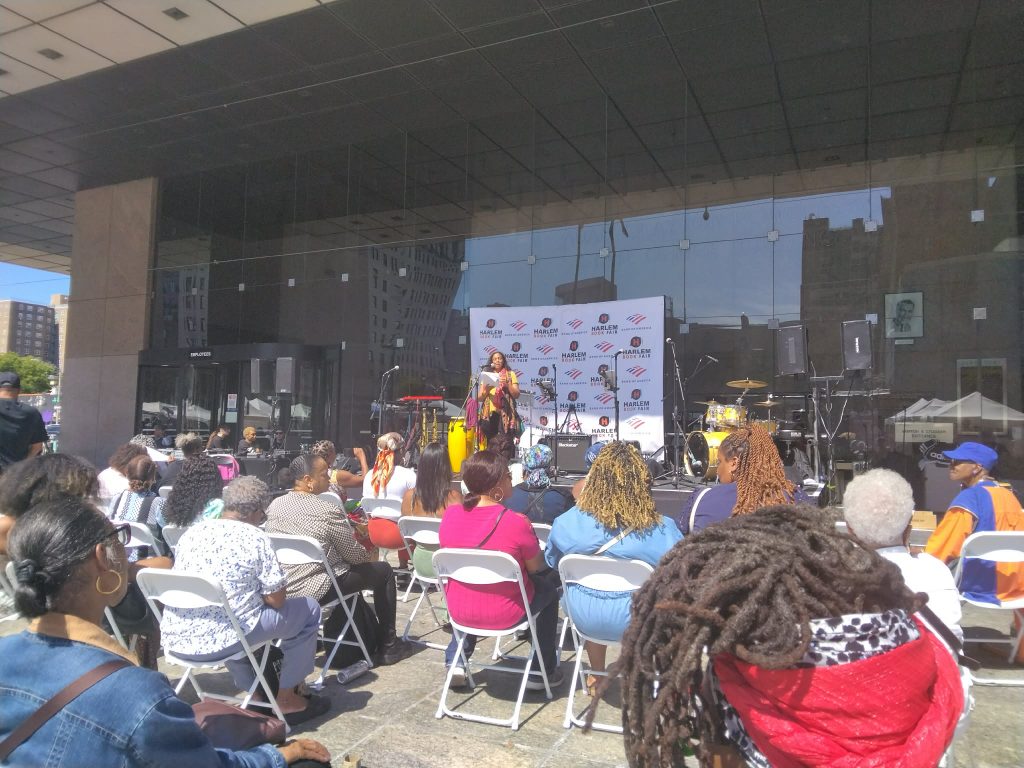
The Outdoor World Stage expanded the Harlem Book Fair beyond the vendor tables with author presentations, poetry and live performance. Photo by Intellectual Ink Magazine.
Celebrating the Harlem Renaissance
The 2026 program guide prominently announced that the fair was “Celebrating the Centennial of the Harlem Renaissance.” The framing fit an event built around literary visibility and the continued importance of Black creative expression.
The Harlem Renaissance represented an extraordinary period of literature, music and art while also demonstrating the power of Black creators claiming space to define Black life, culture, imagination and intellectual thought for themselves. Questions of cultural authority remain relevant a century later, even as the tools available to writers have changed dramatically.
Writers today can publish independently, build audiences through social media, sell directly from their websites and communicate with readers without waiting for a traditional publishing institution to provide access. Greater access to publishing has also produced an enormous volume of material competing for attention, which makes discovery one of the central challenges of contemporary authorship.
Physical literary spaces offer a different kind of opportunity. At a book fair, an author competes less with thousands of thumbnails on a screen and gains the opportunity to speak directly with the person standing in front of the table. A conversation between writer and reader can accomplish something an algorithm may never manage: giving someone a reason to stop, listen and open a book.
Building Businesses One Book at a Time
Business and ownership were also part of the Harlem Book Fair’s larger conversation. Inside the Harlem State Office Building, the Authors’ Gallery hosted “Plunder, Promise, and Prosperity: A Conversation About Institutions, Families, Financial Education, and Economic Justice,” a panel connecting the history of public policy and financial institutions to the racial wealth gap and contemporary financial realities.
Later, “Getting Deals Done: Financial Excellence, Entrepreneurship & the American Dream at 250 Years” brought together Dr. Rachel Laryea, Tara E. Frater, Esq., Sabrina Lamb and moderator Patrick A. Howell for a discussion centered on economic opportunity, ownership and generational asset building. Those conversations widened the scope of a literary festival by placing books within discussions about money, ownership, opportunity and power.
For authors, particularly those working independently, publishing can require understanding production, marketing, distribution, rights, direct sales and audience development alongside the work of writing. The modern literary entrepreneur may still stand behind a folding table and personally explain why a reader should buy a book, while the conversation can now end with a cashless payment, a social media follow, an email subscription or a relationship that continues long after both people leave the fair.
When a Book Becomes More Than a Book
The program also acknowledged another growing part of contemporary authorship: the potential for stories to travel beyond the printed page. “The Art of Adaptation: The Journey from Novel to Location to Film” brought novelists, screenwriters and filmmakers together to examine what happens when written stories are translated for the screen. The conversation addressed creative decisions, locations, rights, financing and the challenge of preserving the emotional truth of a story while adapting it to a visual medium.
The expanded program described independent authors increasingly looking at their novels as potential films and series while also acknowledging the business and creative realities required to make that transition. That development reflects how the definition of authorship continues to expand. For some writers, publishing a book represents the beginning of a larger intellectual property journey that may eventually include film, television, audio or other forms of storytelling.
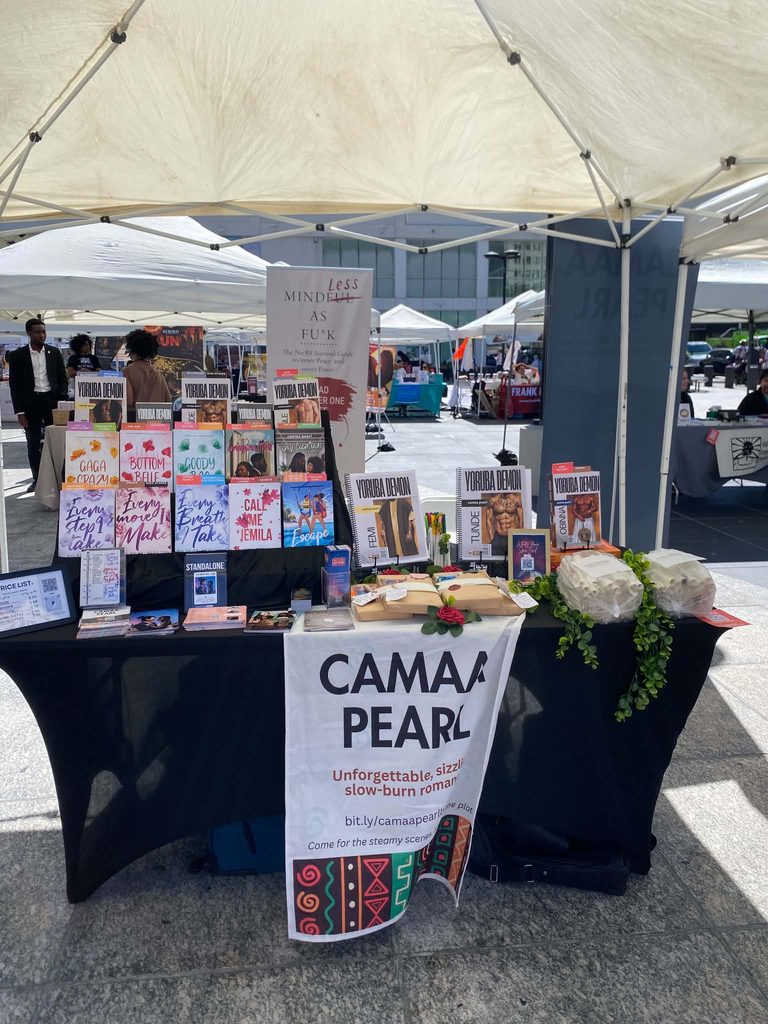
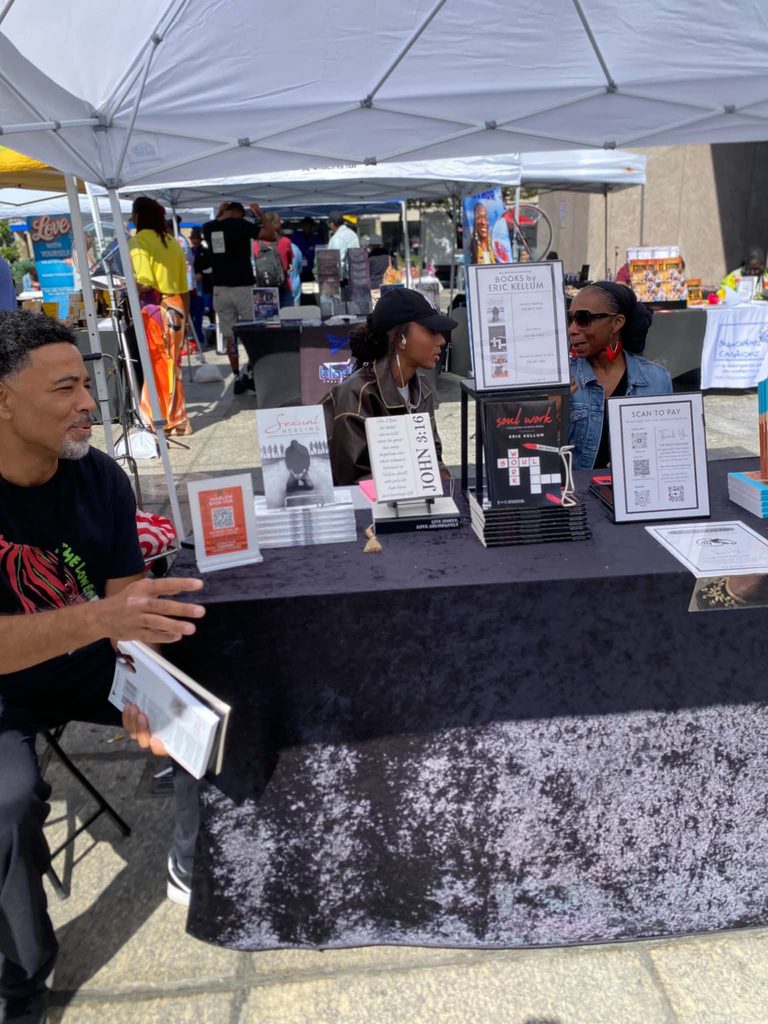
From books and banners to QR codes and branded displays, author entrepreneurship was visible throughout the fair.
The Next Generation Was Part of the Story
One of the most colorful areas of the fair belonged to its youngest readers. Children’s books and educational materials filled tables with illustrated characters, bright displays and stories centered on confidence, imagination, entrepreneurship, family and representation.
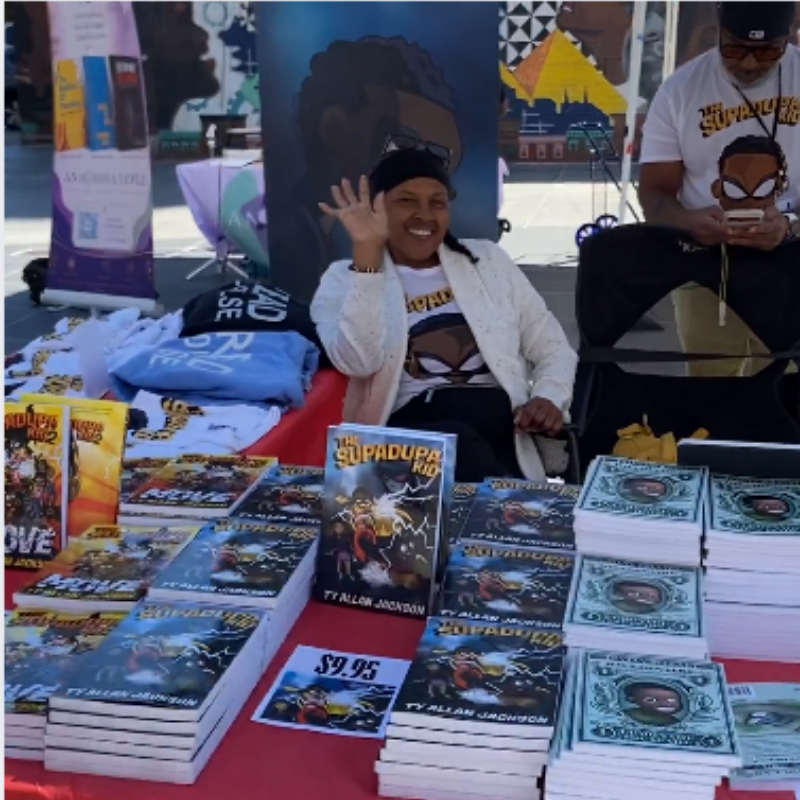
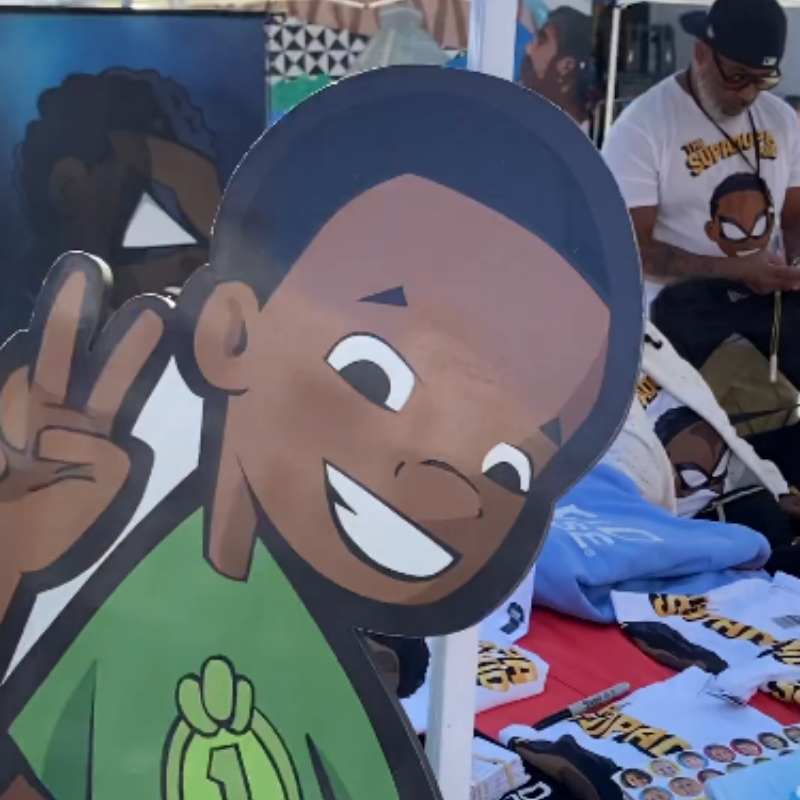
The Stories of a Colorful World schedule supported that presence with a Kids Craft Corner, Brown Babies n Books Kids Clubhouse and a series of Story Corner presentations throughout the day. Among the featured authors was Jaylene Clark Owens with A Black Girl and Her Braids, a picture book celebrating Black hair, creativity and confidence. The afternoon also included Ty Allen with Danny Dollar, Make Your Own Money and The Supadupa Kid, followed by Elechi Osukwe and The Kids Who Wouldn’t.
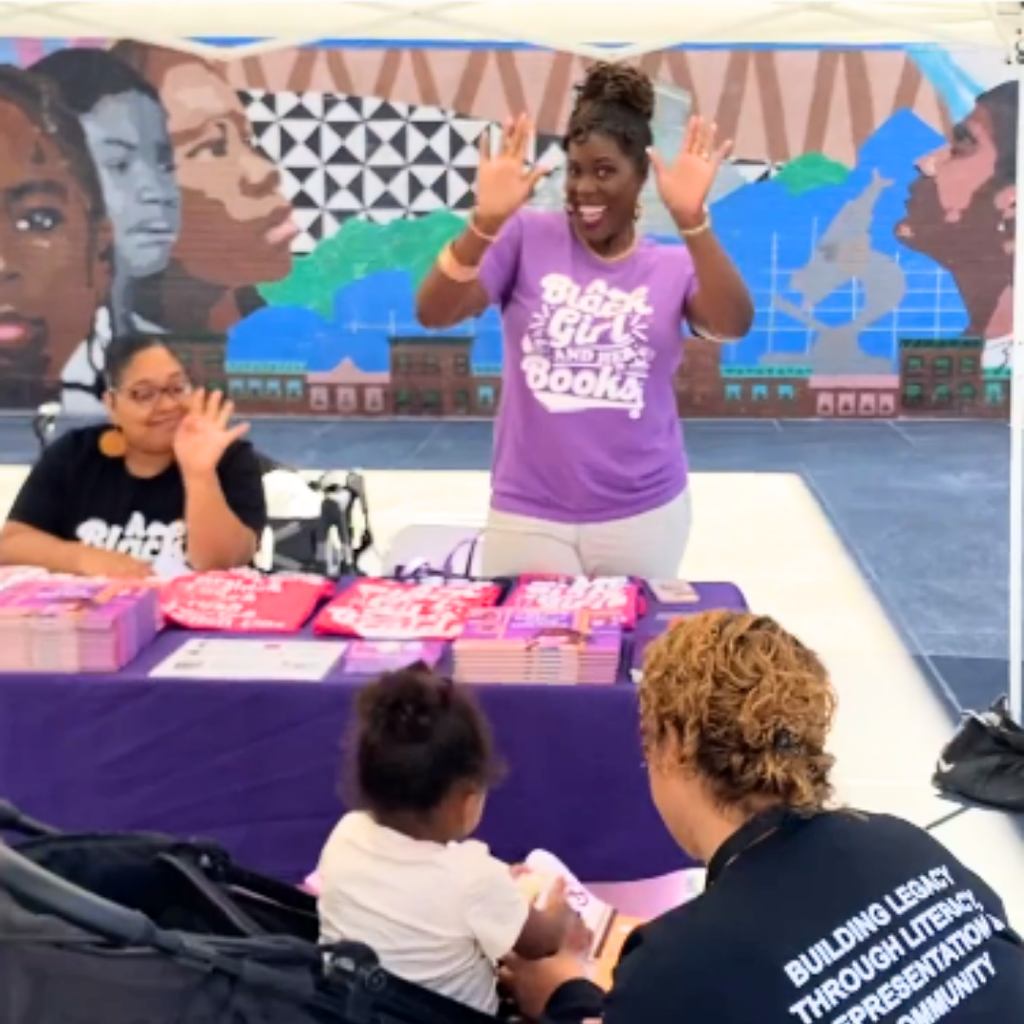
A Black Girl and Her Braids
Author Jaylene Clark Owens celebrates the beauty, creativity and cultural significance of Black hair in A Black Girl and Her Braids. Inspired by her viral poem, the vibrant picture book encourages young Black girls to embrace their braids with confidence and pride.
Children’s literature carries particular weight in a setting like HBF because a young reader can see the person who created the book, ask a question, hear a story read aloud and watch an author sign their name inside the cover. They may also encounter characters whose hair, families, neighborhoods and experiences resemble their own, giving representation an immediate and personal dimension.
Those encounters can make authorship tangible. A book becomes the work of an actual person who imagined an idea, developed it and placed it into the world. For a child watching that process up close, the possibility of creating a book of their own becomes easier to imagine.
The Harlem to Philly Connection
Philadelphia’s presence at the fair extended beyond a line on the main stage schedule. A dedicated Harlem to Philly Connection program brought a contingent of Philadelphia poets and performers to Harlem, creating a cultural exchange between two cities with deep literary and artistic traditions.
The program opened with ZenobiaThePoet, followed by a welcome address from Raina J. Leon, Poet Laureate of Philadelphia, with Amira Jennah serving as Mistress of Ceremonies. The program also featured Karen “Magic Fingaz” Smith, Victoria Huggins Peurifoy, Cheryl “CJ” Jones, Victoria “Duchess” Lambert, Joanna Turner, KP Ultra, Stephon Lamar, Carol McDuffy and Dr. Helena D. Lewis.
The connection had support from Philadelphia institutions and organizations including Drexel Writers Room, the City of Philadelphia and the Free Library of Philadelphia, along with Woods Funeral Home and RX Movement Dance Studio. On the Outdoor World Stage, the official HBF schedule devoted a 1:30 to 2:50 p.m. block to “250 Years of Poetry: The Philly to Harlem Connect.”
For Intellectual Ink Magazine, a Philadelphia-based publication, the connection carried particular significance. Harlem and Philadelphia possess distinct cultural identities, but neither city’s influence has remained contained within its borders. Writers travel, books circulate and artistic traditions move between communities and generations. The Harlem to Philly Connection made that exchange visible on 125th Street.
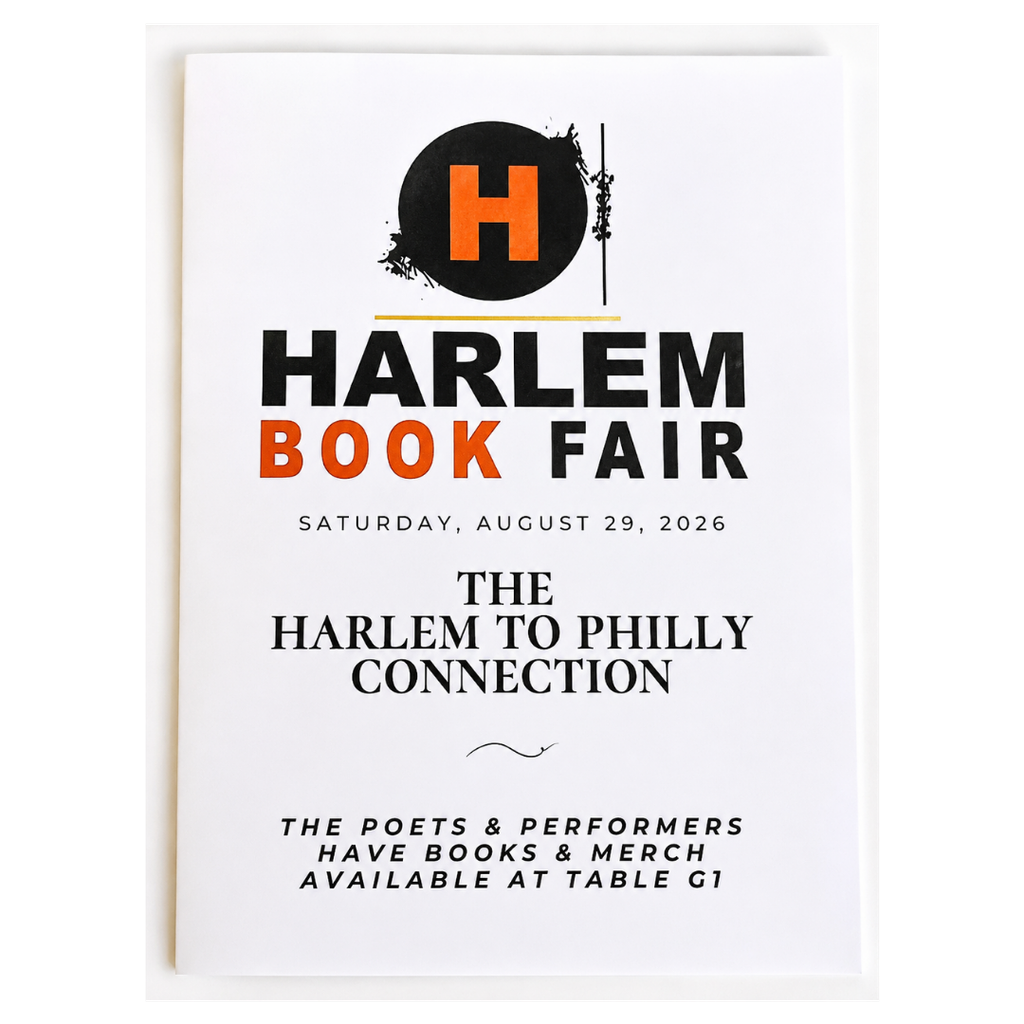
The 2026 Harlem Book Fair program included “250 Years of Poetry: The Philly to Harlem Connect,” creating a literary bridge between two cities with deep Black cultural traditions. Photo by Intellectual Ink Magazine.
An Institution Writing Its Next Chapter
The contemporary Harlem Book Fair exists in a dramatically different publishing environment from the one that led to its creation in 1998. Traditional publishing remains powerful, while writers now have more ways to reach the public than previous generations could have imagined. Independent publishing has matured, social media has created direct lines between authors and readers, and audiobooks, ebooks, streaming platforms and digital communities have changed how stories are created, discovered and consumed.
At the same time, physical literary spaces have become increasingly valuable because they provide something digital platforms cannot fully reproduce. They allow writers and readers to occupy the same place, exchange ideas in real time and discover books through human interaction.
The 2026 fair had a more intimate footprint than some earlier editions, yet cultural relevance cannot be measured solely by crowd size. Institutions evolve alongside neighborhoods, audiences and industries. The larger question is whether the reason for gathering continues to exist, and Saturday provided ample evidence that it does.
Writers still need discovery and readers still value personal recommendations. Independent creators need platforms, children benefit from opportunities to meet the people creating their books, and authors gain something important from looking a reader in the eye and explaining why a story mattered enough to write. Communities also benefit from physical spaces where literature feels immediate, accessible and alive.
The Stories We Tell
By late afternoon, books had changed hands and conversations had moved far beyond what was printed on their pages. Discussions throughout the day touched health and healing, filmmaking and adaptation, economics and wealth, entrepreneurship, poetry, history, childhood, imagination and ownership. Books provided the entry point into a wider conversation about agency and cultural power.
Questions surrounding ownership, audience access, intellectual property, historical preservation and cultural recognition have followed generations of writers. They were central to the artistic movements that made Harlem internationally significant, and they remained present when Max Rodriguez created a platform designed to increase the visibility of Black books. Those questions continue to matter in 2026 as the mechanisms for publishing, promoting and discovering stories change around them.
The continued relevance of the Harlem Book Fair can be found in those connections. For several hours on 125th Street, writers and readers occupied a space centered on the value of stories, ideas and intellectual life. Nearly three decades after the first Harlem Book Fair, that exchange continues, and there are still stories left to tell.