
The Power of the Press: 178 Years of The North Star
3 min read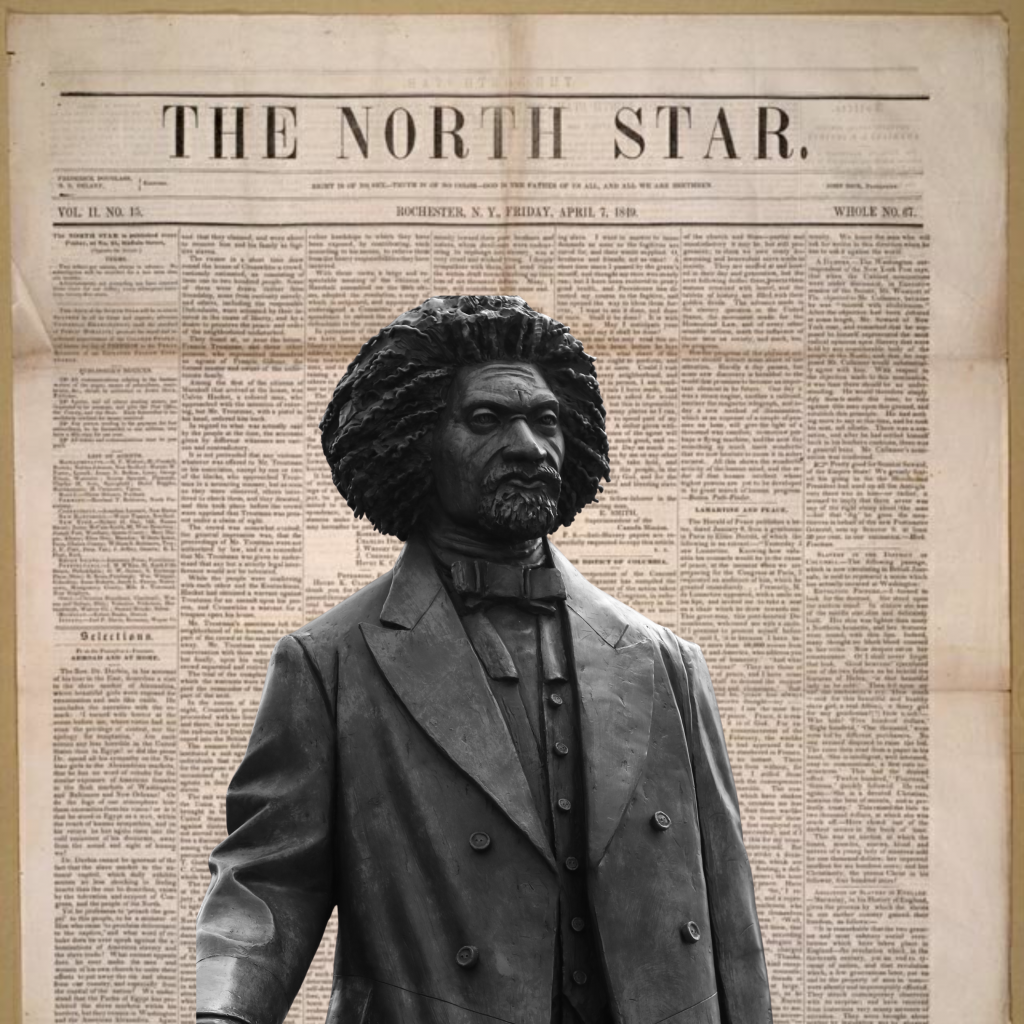
A Free Voice for a Free People: Frederick Douglass’s Radical Act of Journalism
On December 3, 1847, in a small printing office in Rochester, New York, a beacon was lit in the abolitionist movement. That day marked the publication of the first issue of The North Star, a newspaper founded, edited, and financed by Frederick Douglass. This was not merely another abolitionist paper. It was a radical, independent declaration that the Black struggle required a Black voice, and the commitment to this truth continues to resonate 178 years later.
The Separation: A Call for Independent Thought
Before The North Star, Douglass had served as a powerful orator and writer for William Lloyd Garrison’s influential anti-slavery newspaper, The Liberator. Garrison, a white abolitionist, famously employed the slogan: “No Union with Slaveholders.”
However, Douglass came to realize a crucial gap. He wrote in his first issue:
“The man who has suffered the wrong is the man to demand the right. The man who has felt the chain is the man to tell you what it is, and the means necessary for its removal.”
Garrison and others were deeply skeptical of Black leadership and opposed Douglass starting his own paper. Yet, Douglass understood that true advocacy meant controlling the narrative. The North Star was founded on the principle that to effectively combat the dehumanizing lies of slavery, the perspective, intellect, and lived experience of the enslaved and formerly enslaved had to take center stage.
More Than Just Abolition: A Platform for Universal Rights
While abolition was the paper’s primary focus, The North Star distinguished itself through its unflinching dedication to universal human rights. Its masthead proudly proclaimed: “Right is of no Sex – Truth is of no Color – God is the Father of us all, and all we are Brethren.”
- Women’s Rights: Douglass was a staunch supporter of the nascent women’s rights movement. The paper covered the Seneca Falls Convention of 1848 and championed the rights of women to vote and own property, recognizing the deep intersection of gender and racial oppression.
- Education and Self-Improvement: The pages of The North Star were filled with essays advocating for education, economic independence, and moral reform, providing a blueprint for the elevation of the Black community. It was a guide for survival and a manual for liberation.
- Literary Excellence: Douglass used his paper to showcase the intellectual depth of Black Americans, publishing letters, speeches, and essays that were rhetorically powerful and politically astute, cementing his legacy not just as an activist, but as one of America’s greatest writers.
Legacy in Intellectual Ink
The North Star was a monumental feat, achieved under constant financial strain and personal threat. It proved that the pen was indeed as mighty, if not mightier, than the sword. It established a tradition of independent Black media, a literature of resistance and self-definition, that continues today through publications like Intellectual Ink.
As readers and writers of contemporary African American literature, we owe a debt to Douglass’s vision. His independent press did not just report the news. It actively created the space for a free, fully realized Black identity to exist in print. It taught us that our stories must be told on our own terms, by our own voices.
At Intellectual Ink, that legacy is not a vibe. It is the standard. We publish work that refuses to flatten Black life into pain-only narratives or inspiration-only headlines. We make room for craft, imagination, critique, tenderness, humor, rage, joy, and the complicated truth in between. We amplify emerging and established voices with editorial care, not gatekeeping, because a free press is not just who gets published, but who gets taken seriously on the page.
A modern “North Star moment” is anytime a writer decides to stop translating their work for comfort, stops waiting for permission, and tells the story the way it actually happened, or the way it needs to be imagined. That is the point. Not polish for approval, but language that liberates.
Discussion Prompt for Readers:
How does the spirit of independent Black journalism, as embodied by The North Star, influence the African American literature you read today? Which contemporary Black authors or publications do you see carrying forward Douglass’s legacy of “writing truth to power”?