
The Death of Media Literacy in the Social Media Era
5 min read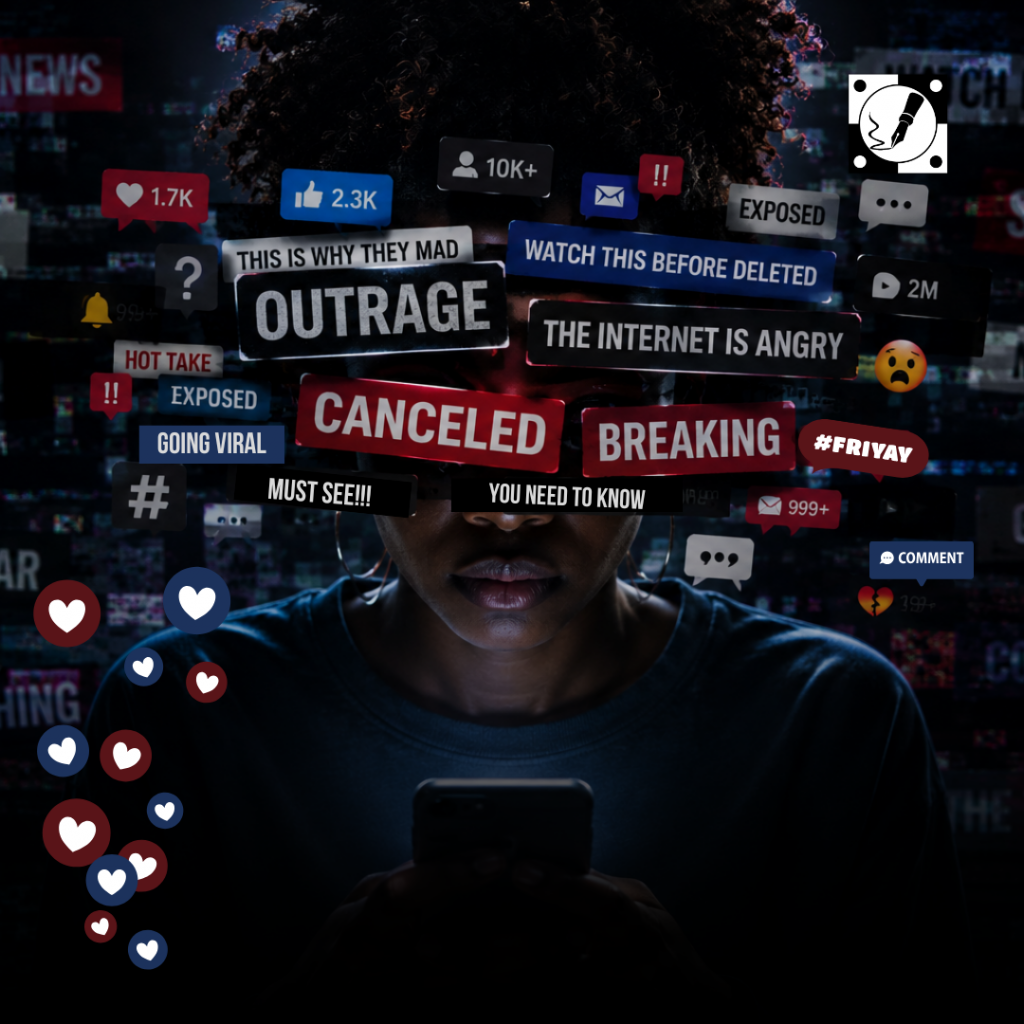
There was a time when audiences spent time sitting with stories. People finished books before reviewing them. They watched full interviews before forming opinions. They argued over themes, symbolism, and meaning after carefully engaging with the material itself. The modern internet has dramatically changed that relationship between audiences and media.
Today, many people consume information through fragments. A thirty-second clip becomes a full political opinion. A screenshot becomes evidence. A headline becomes the entire story. Viral tweets, reaction videos, and algorithm-driven outrage often shape public opinion long before people interact with the original source material.
The speed of modern media consumption has weakened the public’s ability to critically analyze what they are seeing. Media literacy, which includes understanding context, identifying bias, recognizing themes, and evaluating sources, is steadily eroding under the pressure of constant content and endless scrolling.
The consequences extend far beyond entertainment.
Algorithms Reward Emotion More Than Understanding
Social media platforms are designed to maximize engagement. The content that spreads the fastest is rarely the most thoughtful or accurate. Anger, outrage, fear, and conflict consistently outperform nuance and careful analysis because emotional reactions keep people commenting, reposting, and arguing.
This creates an environment where confidence is often mistaken for expertise. A loud opinion delivered quickly can spread further than a well-researched argument that takes time to explain itself. As a result, misinformation thrives in spaces where speed matters more than accuracy.
Many users no longer pause to verify information before sharing it. Articles are reposted without being read. Edited clips circulate without context. Rumors move through timelines as facts because emotional reactions have become the currency of visibility online.
The problem is not simply that people disagree. Healthy disagreement is necessary for meaningful conversation and criticism. The deeper issue is that audiences increasingly engage with information emotionally before they engage with it intellectually.
Audiences Are Losing the Ability to Engage With Subtext
One of the clearest signs of declining media literacy is the growing difficulty many audiences have with recognizing subtext, satire, symbolism, and thematic storytelling.
Stories that explore politics, race, class, trauma, or identity are often criticized by audiences who mistake commentary for endorsement or complexity for confusion. Satire regularly gets interpreted literally. Morally flawed characters are treated as evidence that a writer supports harmful behavior rather than portraying human imperfection.
Many audiences now consume stories only at the surface level. Plot has become easier for people to process than theme. Symbolism and layered storytelling require patience, reflection, and interpretation, all skills that weaken when media consumption becomes dominated by rapid scrolling and short-form content.
This shift has affected conversations surrounding books, film, television, comics, anime, and journalism alike. Nuanced criticism is often drowned out by reactionary commentary designed for virality instead of understanding.
Creators increasingly face pressure to overexplain their work because audiences are less willing to engage with ambiguity or interpretation.
Outrage Culture Has Replaced Critical Discussion
Online discussion spaces increasingly reward confrontation over conversation. Fan communities, political groups, and even literary spaces often function less like communities and more like opposing camps defending territory.
Criticism is frequently interpreted as personal attack. Nuanced opinions become flattened into extremes. A person who enjoys aspects of a work while criticizing others may be accused of disloyalty by one side and dishonesty by the other.
This environment discourages thoughtful analysis. Writers, critics, and journalists often face harassment for expressing opinions that challenge dominant narratives within online communities. The pressure to avoid backlash pushes many creators toward safer commentary and simpler messaging.
Complex discussions become difficult when audiences are trained to immediately choose sides instead of carefully evaluating ideas.
The result is a culture that reacts quickly but reflects very little.
Short-Form Content Is Reshaping Attention Spans
The dominance of short-form content has fundamentally changed how people process information. Platforms built around brief videos, quick captions, and rapid consumption encourage audiences to absorb information in compressed bursts rather than sustained engagement.
Short-form content itself is not inherently harmful. The issue emerges when it becomes the primary way people consume knowledge, stories, and news.
Reading long-form journalism, novels, essays, and investigative reporting develops concentration, empathy, and analytical thinking. These forms of engagement train audiences to follow complicated ideas across time and context. Constant exposure to fragmented content weakens those habits.
Many people now struggle to maintain focus on longer articles, slower films, or complex narratives. Stories that require patience are increasingly dismissed as boring simply because they demand sustained attention.
That shift has major cultural consequences because media literacy depends heavily on a person’s ability to process complexity without needing immediate gratification.
Writers and Journalists Are Being Forced to Adapt
The decline in media literacy affects creators directly. Writers increasingly create with the fear of being misunderstood, clipped out of context, or reduced to viral discourse.
Subtle storytelling is becoming more difficult to sustain in online environments where audiences expect immediate clarity and rapid emotional payoff. Some creators respond by simplifying themes, overexplaining dialogue, or reducing ambiguity to avoid backlash and confusion.
Journalists face similar challenges. Detailed reporting often struggles to compete with simplified commentary packaged for virality. Many readers absorb opinions about news stories without reading the reporting itself.
The result is a media ecosystem where interpretation increasingly overshadows original material.
That creates dangerous conditions for both art and public discourse.
Media Literacy Is Now a Survival Skill
The decline of media literacy is not simply an internet problem. It affects politics, education, public health, journalism, and cultural understanding. A population that struggles to critically evaluate information becomes easier to manipulate through misinformation, propaganda, and emotional conditioning.
Strong media literacy helps people identify unreliable sources, recognize manipulation tactics, understand bias, and separate fact from performance. Without those skills, public conversation becomes increasingly vulnerable to distortion.
Rebuilding media literacy requires intentional effort. Readers must slow down and engage more carefully with information. Schools, libraries, journalists, writers, and communities all play important roles in encouraging critical thinking and deeper engagement with media.
The modern internet rewards speed, reaction, and emotional intensity. Media literacy requires patience, context, and reflection. Those values are becoming harder to protect in digital spaces, which makes protecting them even more important.